Product Description
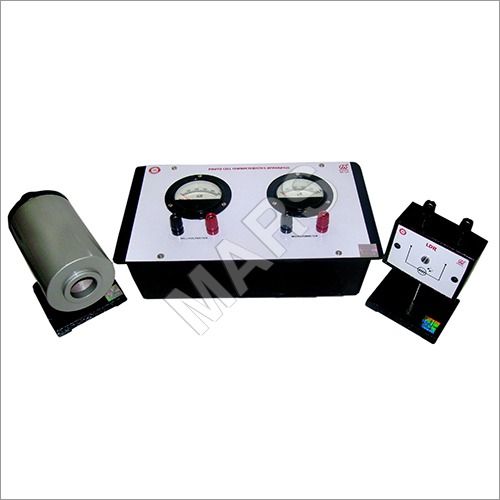
ME547B-UJT Characteristics Apparatus &UJT as Relaxation Oscillator
Objective: V-I characteristics of UJT, observe the wave shape generated by UJT relaxation oscillator and calculate ON time period of arelaxation oscillator.
Technical Specifications :
- Output voltage (Regulated): 0-15VDC, 0-25VDC
- Meters (Analog) : 65mm round 0-15VDC, 0-25VDC, 0-1.5mA/ 60mA DC (Dual Range)
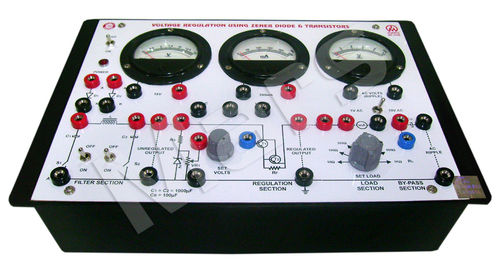
Housed in PVC cabinet, symbol diagram printed,connections of UJT ( 2N2646), all important outputs & test points brought at Bakelite front panel.
Also provided with patch chords & instruction manual
Dual Functionality for Comprehensive LearningThis apparatus enables users to explore both the fundamental characteristics of the UJT as well as its practical implementation as a relaxation oscillator. The dual-purpose design simplifies complex theoretical concepts through direct experimentation, expanding its utility across a variety of engineering experiments.
Flexible Frequency ControlEquipped with variable resistors and capacitors, the frequency of the relaxation oscillator can be finely adjusted up to 1 kHz (dependent on RC values). This flexibility allows students and researchers to observe real-time changes in waveform and understand dynamic circuit behavior.
Safety and Durability at Its CoreThe unit is encased in insulated mild steel and bakelite, incorporating overload protection, vented slots for passive cooling, and an integrated fuse. All connections use banana plug sockets, ensuring user safety and easy setup for repeated laboratory usage.
FAQs of UJT Characteristics Apparatus & UJT as Relaxation Oscillator:
Q: How does the UJT Characteristics Apparatus function as a relaxation oscillator?
A: The apparatus utilizes a 2N2646 UJT, variable resistor, and capacitor to form a relaxation oscillator circuit. By adjusting these components, the circuit generates a sawtooth waveform at the output, which can be measured and analyzed using the provided test points and analog meter.
Q: What are the key benefits of using this device in engineering education?
A: Students and instructors gain hands-on experience with UJT characteristics and oscillator design. The apparatus provides direct observation of current and voltage characteristics and frequency adjustments, reinforcing theoretical principles in practical settings.
Q: When should you adjust the frequency in the relaxation oscillator setup?
A: Frequency adjustment is performed during experiments to study the effects of different RC combinations on oscillator performance. This is typically done while observing changes in output waveform and meter readings to correlate circuit behavior with component values.
Q: Where can the apparatus be utilized most effectively?
A: The UJT Characteristics Apparatus & Relaxation Oscillator is designed for laboratory use in colleges, universities, and technical institutes. Its table-top design and robust features make it suitable for demonstrations, practical sessions, and project work.
Q: What is the process for measuring UJT characteristics with this equipment?
A: Users connect the device to a 230 V AC power source, use the front panels labeled test points for circuit connections, and read the analog meter to measure current and voltage characteristics. Multiple measurement options allow for comprehensive experimentation.
Q: How does the device prioritize safety during operation?
A: Safety is ensured through features like insulated casing, overload protection circuits, integrated fusing, and vented slots for cooling. All experimental connections employ banana plug sockets to prevent accidental contact with live conductors.
Q: What usage recommendations enhance laboratory experimentation with the UJT apparatus?
A: For optimal results, ensure all external connections are secure, vary the resistor and capacitor appropriately to achieve desired frequencies, and utilize the multiple test points for thorough waveform and characteristic analysis.








 Send Inquiry