Product Description
EngineCapacity 8002000cc
MinPower 35 HP 3600 RPM
MinTorque 60 Nm 2500 RPM
DynamometerOptions Hydraulic with Loading Device Hydraulic with Dead Weight Loading Eddy Current with Loading Device
AirIntake Measurement Fabricated Air Box with Orifice Meter and Manometer
FuelTank MS Fabricated Tank with Glass Fuel Measuring Column
Calorimeter PipeinPipe Type
SpeedMeasurement Digital NonContact Speed Indicator with Sensor
TemperatureMeasurement Digital Multipoint Temperature Indicator
TemperatureSensors KType Thermocouples
FuelConsumption Measurement Fuel Measuring Unit Range 0450 ml
AirFlow Measurement UTube Manometer Range 100 mm
Rotameters Engine Cooling Water 1001000 LPH Calorimeter Water 40400 LPH
OverallDimensions W 2000 D 2750 H 1750 mm
Structure Heavyduty painted MS frame supporting all components
Features
Experiments Conducted
3 Utility Requirements
Water Supply
Space Requirement
Drain
Consumables
Learning Outcomes
IC engine performance testing
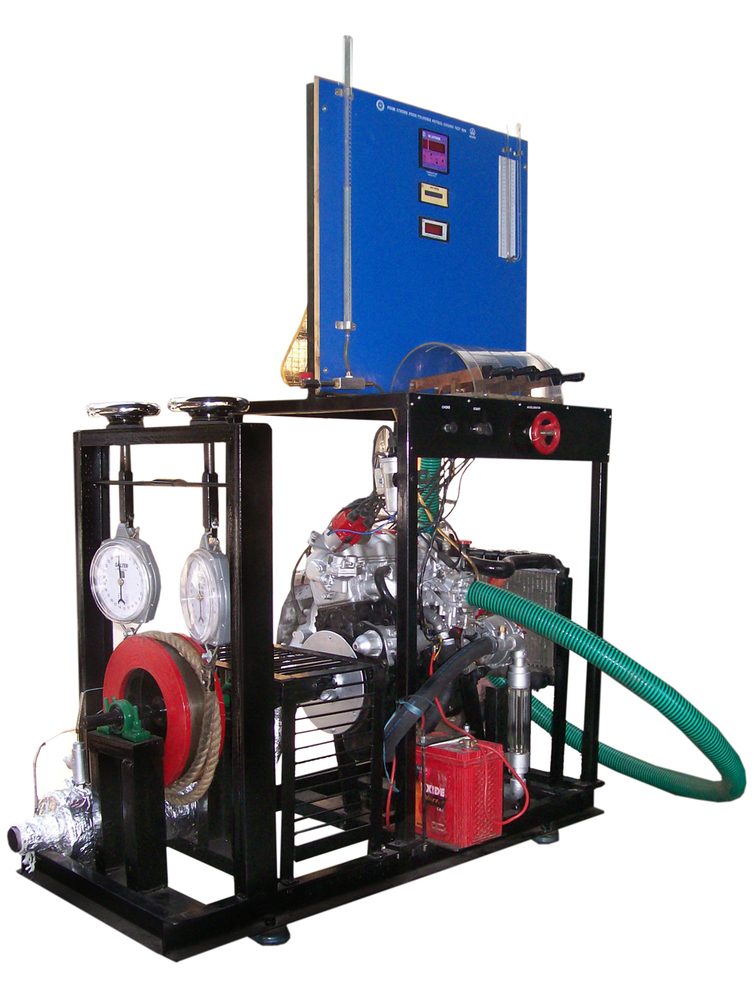
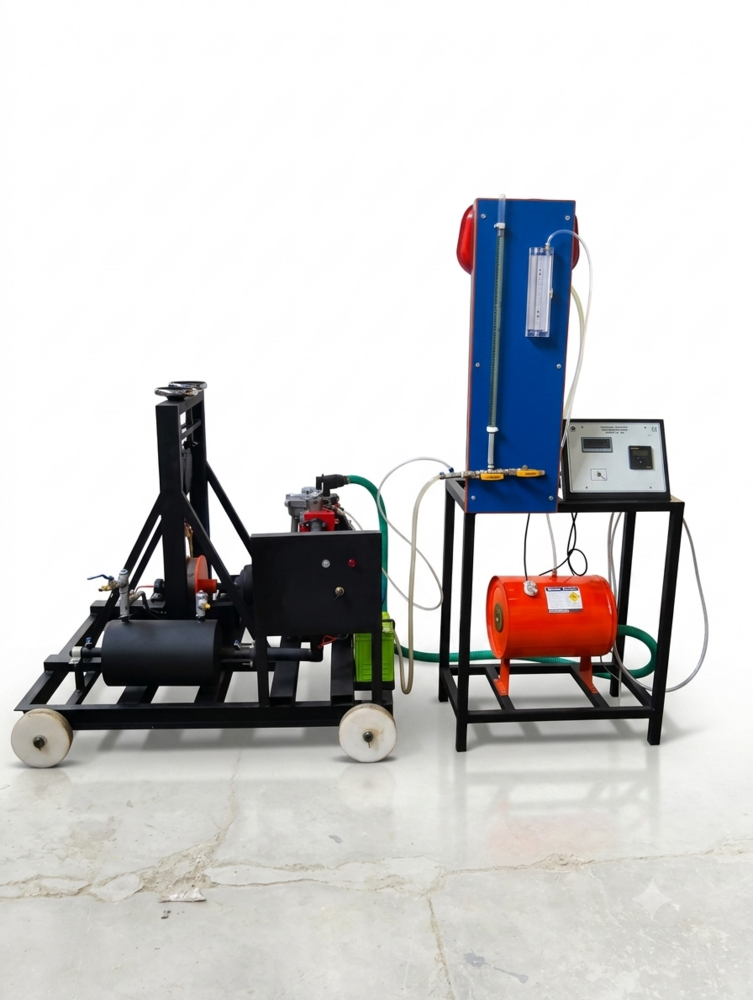
Advanced Engine Testing for Comprehensive AnalysisThe MORSEPETROLMULTICYL test rig serves as a sophisticated solution for complete engine testing, providing water-cooled operation, digital-analog displays, and multi-point safety measures. Its precision measurement tools and versatile testing capabilities facilitate accurate evaluation of multiple engine parameters, supporting detailed educational and research outcomes.
User-Friendly and Customizable DesignEngineered with a mild steel frame, powder coating, and stainless steel fittings, this test rig combines durability with simple operation and easy maintenance. Customizable for one to four cylinders, it suits a range of power outputs up to 20 kW and includes all necessary accessories and options for computer-assisted data collection.
FAQ's of MORSE TEST MULTI CYLINDER PETROL ENGINE TEST:
Q: How does the Morse Test Multi Cylinder Petrol Engine Test rig determine the power of individual cylinders?
A: The rig performs the Morse test by sequentially disabling one cylinder at a time while measuring the overall engine output. The power loss observed corresponds to the contribution of that particular cylinder, allowing accurate determination of each cylinder's performance.
Q: What types of measurements and instrumentation are provided with this engine test rig?
A: The system includes a digital tachometer for RPM, digital voltmeter and ammeter, temperature and pressure gauges, a burette with graduated scale for fuel consumption, and manometers for pressure differentials. Both analog and digital displays are available for comprehensive data capture.
Q: When should the emergency stop and overload protection features be used?
A: Emergency stop and overload protection are critical for safety, to be engaged instantly if abnormal engine behavior, overloading, or hazardous conditions arise during testing. These features quickly disconnect the system, protecting both the operator and the equipment.
Q: Where is this engine test rig most commonly used?
A: This equipment is widely utilized in educational institutions, research and development facilities, and laboratory environments for teaching, experimental studies, and the evaluation of engine performance under controlled conditions.
Q: What is the process for measuring fuel consumption in this test rig?
A: Fuel consumption is measured using a burette with a graduated scale. During operation, the amount of fuel consumed by the engine is monitored and recorded, enabling accurate calculation of efficiency and fuel usage.
Q: How does water cooling with flow control benefit engine testing?
A: The water-cooling system with flow control maintains optimal engine temperature during testing, ensuring consistent and reliable performance, preventing overheating, and allowing prolonged operation for detailed studies.
Q: What are the main benefits of using this test rig for multi-cylinder petrol engine analysis?
A: Key benefits include high accuracy, robust construction, customizable cylinder capacity, comprehensive safety features, a combination of digital and analog data monitoring, and optional computer integration, all supporting precise diagnostics, teaching, and R&D activities.








 Send Inquiry