Product Description
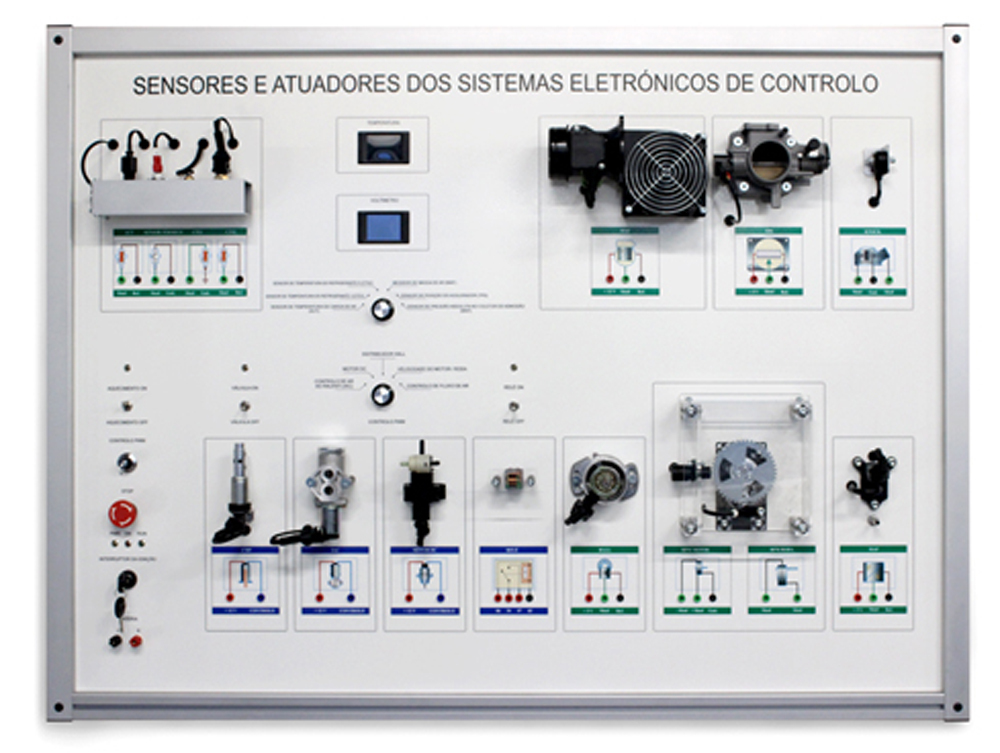
Actuator TrainingPlatform
AC Servo Module
a AC Servo Motor
1 Power 400W
2 Rated Voltage 220V
3 Rated Speed 0 to 3000 rmin
4 Current 10Ampere
5 Control type PWM control using Drive
6 Encoder 2048 2500 10000 Pulse Rev Incremental Absolute
7 Dynamic brake ServoController offOperable with the builtin alarm activated
b Servo Drive System
1 LED display 5digit seven segmentdisplay
2 Function key 5 nos mode shiftup down set
3 PLC 1 no
4 Digital inputs 4 nos
5 Digital outputs 4 nos
6 Communication USB
c Speed DPM display
1 Display Single
2 Display 4digit 056 7segmentred LED display
3 Range 4 to 5000 RPM
4 Input PNP switch
5 Supply 100 to 270V AC
d Inductive Proximity Sensor
1 Type M12
2 Output PNPNPN NO
3 Sensing distance 4 mm
e Voltage DPM display
1 Measuring range 010VDC
2 Variable DC Supply 010V
3 Potentiometer 1 no
4 Measuring range 010VDC
5 Toggle switch One for Servo onoff
One for direction four for PLC inputs 6 nos
6 Indicator One for servo status and onefor direction 2 nos
7 Power Indicator 1 no
Contactor
1 Siemens 3RT2 Contactor
2 Operating Voltage 24 V DC Coil
3 3Pole 9 A 4 kW
4 3NO 5 400 V AC
Solenoid Valve
1 Line Size
2 Operating Voltage 24VDC
3 Operation Directing Acting
4 Acting Type Normally Closed type
Induction Motor
1 Power 05HP
2 Speed 25003000 RPM
3 Voltage 415VAC
4 Operating voltageThree phase
Stepper Motor
1 Motor Type Unipolar
2 Torque 6 Kgcm
3 Phase Current 08 Amp
4 Stepping Angle 18 09
DC Motor
1 Operating Voltage 24VDC
2 RPM 5001000
Variable frequency Drive
1 05501 kW
2 380 to 500V
3 3 phases 380480V AC 5060 Hz
4 Frequency Range 01 Hz to 599 Hz PLCIntegration Communication Digital Communication Builtin Modbus RTUTCPEther Net IP or PROFINET for highspeed data exchange with the PLC
Analog IO Typically 010V DC or420mA for speed reference and feedback Discrete IO 24V DC logic for StartStopReverse and Fault Reset commands
5 Control Methods Supports Scalar VHzOpenloop Vector and
Closedloop Vector control for highprecision torque and speed regulation
6 Safety Features Safe Torque Off STOor Safe Stop 1 SS1 for
emergency shutdowns
Bulb
1 Capacity 100W
Solid State Relay
1 40 Amp
2 332 V DC Input
3 Controls 24380 V AC Devices
DPDT Relay
1 Electromagnetic Power Relay
2 8Pin 10 AMP 24V DC Relay Coil withSocket Base
Tower Light
1 3 Tier LED Tower Light
2 Color Red Green Yellow
3 Supply Volts 24VDC
4 With Buzzer
Linear Actuator
1 Operating Voltage VDC24
2 Stroke Length mm100115
3 Force N15002000
4 Speed mms710
5 Protection level IP55
6 SelfLocking Force 1500N1800N
Seven segment display modules
1 Seven segment display 2 5 nos
2 Input operating voltage 5V12V
3 PLC connection 2mm sockets
Versatile Multi-Actuator PlatformThis platform accommodates up to 10 actuator channels, supporting various actuators such as solenoid valves, DC, stepper, and servo motors, as well as linear actuators. Its modular design enables students and technicians to experiment and learn using multiple actuator types within a single system.
Advanced Control and ConnectivityWith integrated manual and automatic control options, the system is operated through a reliable controller. It incorporates banana socket connectors and a D-Sub input interface for flexible connections. Communication is streamlined via RS232 and an optional USB port, enhancing integration with other lab devices.
Robust Safety and User-Friendly DesignDesigned with safety and convenience in mind, the platform includes overload/short circuit protection, clearly marked test points with protective covers, and user-replaceable modules. Its laminated identification panel and powder-coated metal frame ensure both durability and easy identification of components.
Ideal for Technical EducationTailored for vocational training, polytechnic education, and industrial skill development, this semi-automatic trainer is suitable for desk or wall mounting. It enables thorough technical education through fault simulation, plug-and-play modules, and digital display, making learning effective and engaging.
FAQ's of Actuator Training Platform:
Q: How does the Actuator Training Platform enhance learning in technical education environments?
A: The platform enables students to operate and experiment with multiple actuator types using plug-and-play modules and fault simulation features. Its hands-on approach fosters critical thinking and practical skills in actuator control, vital for careers in automation and mechatronics.
Q: What types of actuators are compatible with the ATP-2024 training platform?
A: It supports a wide range of actuators, including solenoid valves, DC motors, stepper motors, servo motors, and linear actuators. This compatibility allows multi-component demonstrations to cater to various learning objectives and real-world scenarios.
Q: Where can this training platform be installed and used effectively?
A: The ATP-2024 is ideal for vocational schools, polytechnic institutes, industrial training centers, and laboratory environments. Its flexible mounting options allow installation on a desk or wall, accommodating different space requirements.
Q: What safety features are built into the Actuator Training Platform?
A: Overload and short circuit protection, safety-protected interfaces, and test points with protective covers help safeguard users and equipment. The robust construction using a powder-coated frame and durable plastics further enhances operator safety.
Q: How can modules or components be serviced or replaced on the platform?
A: Modules are designed to be user-replaceable. Clear labeling on the laminated identification panel helps in locating and servicing components efficiently, minimizing downtime and simplifying maintenance tasks.
Q: What are the connectivity and communication options for data logging and integration?
A: The system offers data connectivity through RS232 and an optional USB interface, allowing for easy integration with computers or external control devices for data logging, analysis, or extended control.
Q: What are the key benefits of using the ATP-2024 in laboratory training?
A: Benefits include practical exposure to real-world actuator control, enhanced understanding of automated systems, easy fault simulation for troubleshooting exercises, and robust safety. The platform also supports up to 10 channels for comprehensive group or individual training sessions.







 Send Inquiry
